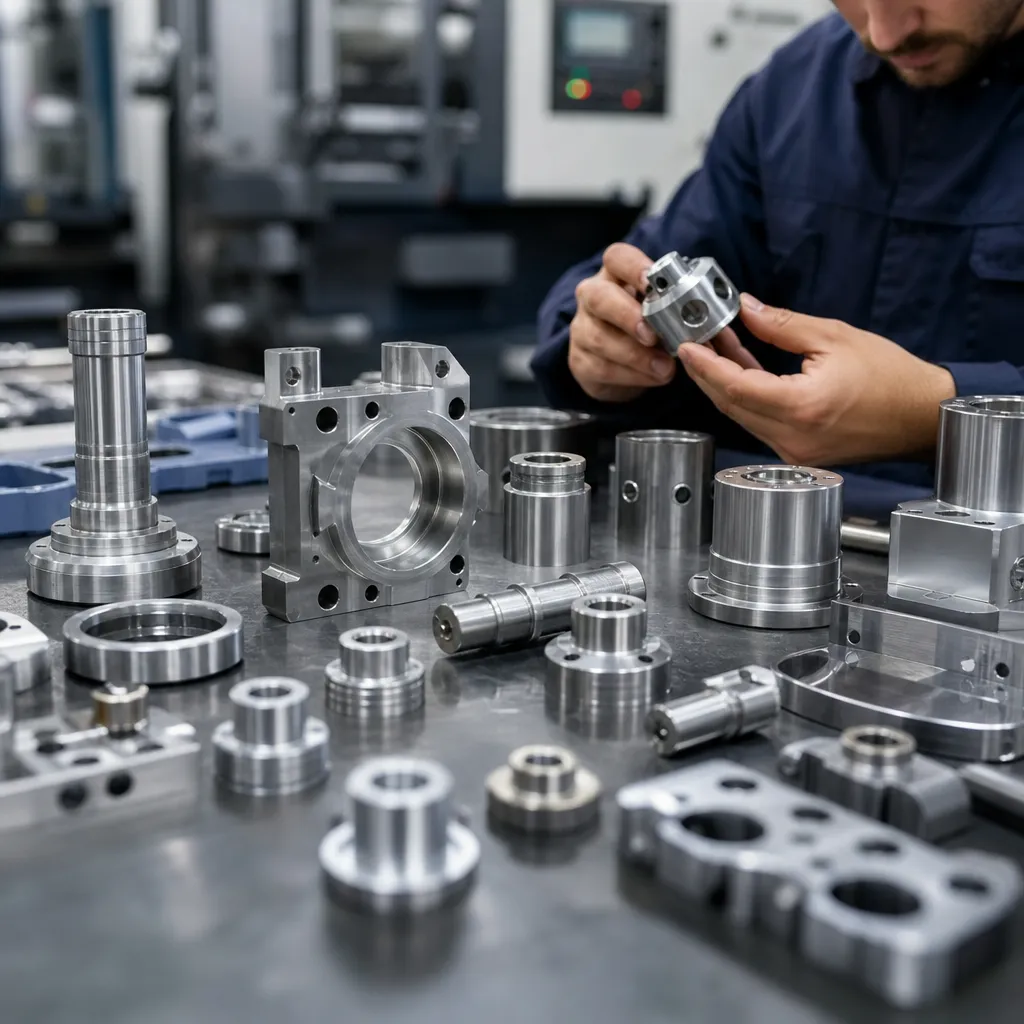
In modern manufacturing, product performance often depends on parts that rarely get noticed. One of the most important among them is the precision machined component — a part made to exact dimensions, tight tolerances, and specific functional requirements so it fits and performs reliably in an assembly.
Whether it is an automotive system, electrical equipment, industrial machinery, a gear unit, or a robotics application, precision machined components help ensure that machines run smoothly, safely, and consistently. When these parts are made accurately, manufacturers reduce failures, improve product life, and maintain quality at scale.
For businesses in engineering hubs like Coimbatore, where industries depend heavily on machining and component supply, precision manufacturing is more than a production process — it is a core part of industrial reliability.
---
What Are Precision Machined Components?
Precision machined components are parts manufactured using machining processes such as turning, milling, drilling, grinding, and CNC operations to achieve very specific measurements and surface finishes.
They are designed for applications where even a small variation can affect:
- Fit and alignment
- Load handling
- Motion and rotation
- Sealing and leakage control
- Electrical contact or conductivity
- Long-term durability
Unlike general-purpose parts, these components are made with tight tolerances and consistent repeatability. That means every part in a batch is expected to match the required specifications closely.
Common examples include:
- Shafts
- Bushes
- Spacers
- Pins
- Couplings
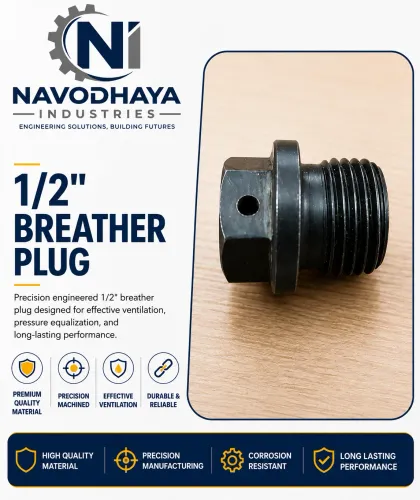
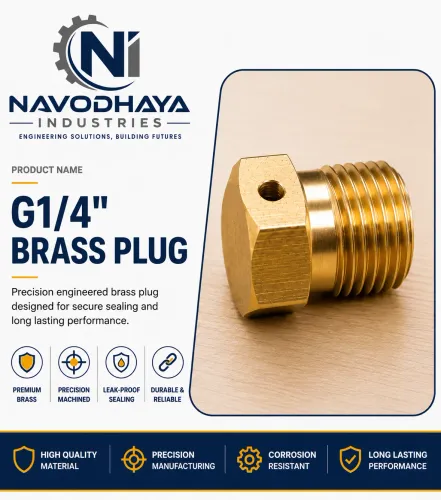
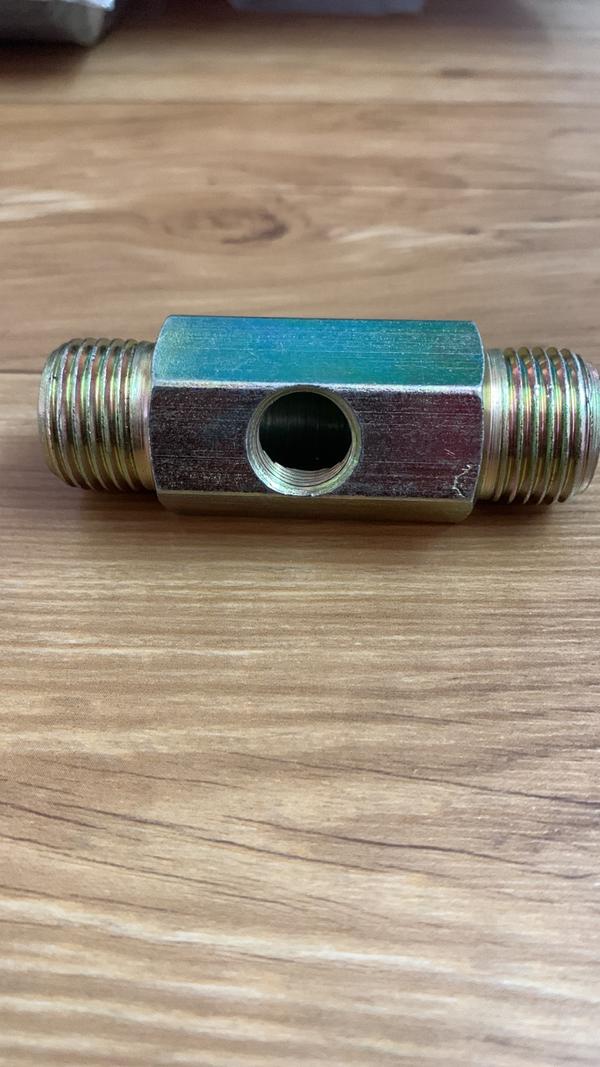
- Threaded fasteners
- Custom inserts
- Sleeves
- Connector parts
- Small mechanical assemblies
These may look simple, but their role in a machine is often critical.
---
Why Precision Matters So Much
In manufacturing, a component does not work in isolation. It interacts with other parts, often under pressure, vibration, heat, friction, or continuous motion. If one part is even slightly off, the result can be:
- Poor assembly fit
- Excess wear
- Noise or vibration
- Reduced efficiency
- Premature failure
- Increased maintenance costs
Precision machining helps prevent these issues by ensuring every part meets the intended design exactly.
A small error can create big problems
For example, if a shaft diameter is off by just a small amount, it may cause:
- Loose fitting
- Bearing damage
- Misalignment
- Loss of performance
That is why precision machined components are essential in industries where reliability cannot be compromised.
---
How Precision Machined Components Are Made
The manufacturing process depends on the part design, material, quantity, and application. In most cases, production involves a combination of modern and conventional machining techniques.
1. Material selection
The process begins with selecting the right raw material, such as:
- Mild steel
- Stainless steel
- Brass
- Aluminium
- Copper
- Alloy steels
- Engineering-grade materials
The material must suit the component’s function, environment, and mechanical requirements.
2. Machining process
Depending on the part, manufacturers use:
- CNC turning
- CNC milling
- Conventional turning
- Drilling and tapping
- Grinding
- Secondary operations
CNC machining is especially useful because it improves repeatability, speed, and accuracy for both batch production and specialized development work.
3. Inspection and quality control
Precision parts must be checked carefully throughout the process. This usually includes:
- Incoming raw material inspection
- In-process checks
- Final dimensional inspection
- Functional testing
- Traceability and documentation
Without quality control, even advanced machining equipment cannot guarantee consistent output.
---
Where Precision Machined Components Are Used
These components are used across a wide range of industries because almost every engineered product needs accurate mechanical parts.
Automotive
In vehicles, precision parts are used in:
- Engine assemblies
- Transmission systems
- Steering components
- Brake systems
- Fuel and fluid systems
Electrical and electronics
They support:
- Switchgear
- Terminal systems
- Contact assemblies
- Connectors
- Mounting and support structures
Industrial machinery
Machines used in production and processing often rely on:
- Shafts
- Guides
- Couplings
- Mounting components
- Wear-resistant parts
Gear and drive systems
Precision components are crucial for:
- Alignment
- Torque transfer
- Motion control
- Reduced friction
Robotics and automation
Robotics demands high accuracy because even tiny dimensional variations can affect:
- Movement
- Sensor alignment
- Structural stability
- Repeatability
Pumps and fluid systems
In these applications, precision parts help maintain:
- Pressure integrity
- Smooth rotation
- Leak control
- Efficient operation
---
Key Benefits of Precision Machined Components
The value of precision machining goes far beyond dimensional accuracy. It influences the entire lifecycle of the final product.
1. Better performance
Accurate parts fit properly and function as designed, which improves overall machine performance.
2. Longer service life
Properly machined components reduce wear and stress on adjacent parts.
3. Improved reliability
Machines built with precision parts are less likely to fail unexpectedly.
4. Lower maintenance costs
When parts are consistent and durable, downtime and replacement costs decrease.
5. Easier assembly
Well-made components simplify production and reduce rework during assembly.
6. Better standardization
Manufacturers can maintain consistent quality across multiple production batches.
---
What Makes a Precision Component Truly High Quality?
Not every machined part qualifies as a precision component. Quality depends on several factors working together.
Tight tolerances
The part must stay within specified dimensional limits.
Surface finish
A smooth, controlled finish can affect friction, wear, sealing, and fit.
Material consistency
The raw material must be suitable and uniform.
Process control
Each stage of production should be stable and repeatable.
Traceability
Knowing which material batch and process route was used helps maintain quality and accountability.
Inspection discipline
Good machining is always supported by strong inspection procedures.
---
Common Misconceptions About Machined Components
“All machined parts are the same”
Not true. A general part and a precision part may look similar, but their accuracy, finish, and performance expectations can be very different.
“Only complex parts need precision”
Even simple components like spacers or pins can be critical if they affect alignment or movement.
“CNC alone guarantees quality”
CNC helps, but quality also depends on tooling, programming, material selection, operator skill, and inspection systems.
“Precision machining is only for large manufacturers”
In reality, precision components are needed by both large OEMs and specialized equipment makers across many sectors.
---
Why Precision Machining Matters in Indian Manufacturing
As Indian industry continues to grow, the demand for dependable machined parts is increasing. OEMs and Tier-1 suppliers need components that can support higher production speeds, tighter performance expectations, and global-quality standards.
This is especially important in engineering centers like Coimbatore, where a strong manufacturing ecosystem supports automotive, gear, pump, electrical, and industrial sectors. Precision machining helps local manufacturers stay competitive while meeting exacting customer requirements.
---
Choosing the Right Machining Partner
If a company sources precision machined components, a few factors matter more than price alone:
- Can the supplier meet tight tolerances consistently?
- Is there a proper quality management system?
- Are inspection and traceability part of the process?
- Can the supplier handle both development and batch production?
- Is delivery performance reliable?
- Does the supplier understand the end-use application?
These questions matter because the component’s quality directly affects the finished product.
In Coimbatore, manufacturers such as Navodhaya Industries have built their role around this kind of engineering support, producing turned and machined components for sectors like automotive, electrical, machinery, gear manufacturing, robotics, and pumps. Their relevance comes not from promotion, but from the practical need for dependable precision parts in demanding industries.
---
Final Thoughts
Precision machined components may be small, but they play a huge role in manufacturing quality, machine performance, and product reliability. From automotive assemblies to robotics and industrial machinery, these parts help ensure that systems function as intended, with less wear, less downtime, and better consistency.
For engineers, buyers, and manufacturers, understanding precision machining is important because it directly affects cost, quality, and long-term performance. In a production environment where every detail matters, the right component can make the difference between a product that merely works and one that performs reliably for years.
If you'd like, I can also turn this into:
- a more SEO-optimized version
- a shorter blog post
- a homepage-style educational article
- or a version with a Coimbatore/local manufacturing angle
Keywords